Wang Gui-rong (王桂榮)
Wang Gui-rong (1931–2012), also known in English as Kenjohn Wang, was a Taiwanese American entrepreneur, philanthropist, and community leader. He built a hotel and real estate empire in Southern California, founded the Taiwanese American Foundation (TAF), and served in multiple advisory roles to the governments of Taiwan and the United States. He is widely regarded as one of the most generous benefactors in the Taiwanese American community.
Identity Snapshot
- English: Wang Gui-rong / Kenjohn Wang
- Chinese: 王桂榮
- Born: 1931, Taiwan (under Japanese rule)
- Died: 2012-02-11, Taipei Medical University Hospital, age 81–82
- Citizenship: United States (naturalized 1979-08-24)
- Spouse: 王賽美 (Jacqueline Wang)
- Children: Three sons — Kenneth, John, Michael
- Roles: Entrepreneur; hotel developer; philanthropist; community leader; public affairs advocate
- Organizations: Taiwanese American Foundation (TAF); LA Taiwan Center; FAPA; FAPA; Taiwanese Chambers of Commerce
Early Life
Wang Gui-rong was born in 1931 in Taiwan, then under Japanese colonial rule. He attended the Junior College of Administration of Taiwan (now part of National Taipei University) and graduated in 1951. He then joined the military, serving as a lieutenant translator for the U.S. Military Assistance Advisory Group (MAAG) at the Tainan air base from 1955–1956 — a role that established his first connections with Americans.
His future wife, 王賽美 (Jacqueline Wang), was studying at 靜宜英專 (now 靜宜 University, then a junior college in Taichung) and worked at the Taipei American School library and as an elementary school teacher. They married and built their early lives around Taiwan’s English-language and military-adjacent institutions.
Wang originally continued his family’s international trade, Western medicine manufacturing, and import-export businesses in Taiwan. In 1965, he began graduate studies in politics at Kansas State University, then transferred to the University of Texas at Austin for a PhD. Realizing the practical demands of supporting a family, he switched to accounting and eventually opened a CPA firm in Washington, D.C.
Immigration to the United States
Wang’s decision to immigrate was driven by geopolitical fear. In July 1971, Henry Kissinger secretly visited Beijing on behalf of President Nixon. In October 1971, the UN expelled the Chiang Kai-shek government’s representative. Wang recalled: “Friends told each other [that the Chiang regime was expelled from the UN] and all believed Taiwan would fall into chaos.” His fear that Taiwan might fall under Chinese Communist rule was shared by most Taiwanese residents at the time.
Wang and his wife initially planned to immigrate to Paraguay. In 1972, one year after the Shanghai Communique, they migrated to Paraguay. However, while transiting through the United States on their way to South America, they stopped in California for half a year. Despite having no legal status at the time, they enrolled their three children in a nearby elementary school. The principal, moved by compassion, allowed the children to attend and even provided school bus transportation, free lunches, and a dedicated English teacher. Wang later described this experience as “imagine something so wonderful happening in a foreign land — I suddenly wondered if America was the paradise described in Buddhist scriptures.”
This experience established Wang’s deep affection for America and resolved his commitment to give back. He later wrote: “I resolved to earn money, pay taxes, earn more, and pay more taxes, to repay this warm society.”
They ultimately abandoned their Paraguay plan and applied for immigration to the United States — a decision Wang regarded as one of the most significant and correct choices of his life.
Hotel Empire
After settling in California, Wang began his business career in the hospitality industry. In 1974, he purchased his first hotel, the Newland Apartment Motel in Westminster, Orange County. The family worked together — Wang described it as “sweat and toil” (胼手胝足) — and the first year’s profits far exceeded expectations.
In 1975, Wang purchased the long-neglected Outrigger Inn in Long Beach, California. He invested heavily in renovations and operations, transforming the property completely. This hotel became the cornerstone of his empire: he joined the Ramada Inn chain, and Wang later refused lucrative buyout offers because of his special attachment to the property. He expanded it into a mid-to-large hotel, with the ground floor as commercial space and the upper floors housing the Wang family enterprise headquarters.
His hotel empire grew to include:
- Ramada Inn / Outrigger Inn (Long Beach) — the flagship
- Holiday Inn (Montebello, purchased 1978-07)
- Atrium Hotel
- Additional properties in Southern California
Wang earned the nickname “旅館大王” (Hotel King) among Taiwanese American business circles. During the 1973–1978 period, when Taiwan’s international situation deteriorated and the U.S. economy was in recession, many Taiwanese business leaders and military officials’ children came to Southern California seeking guidance. Wang welcomed all of them, shared his business secrets freely, and became known as a generous mentor.
Philanthropy and Community Leadership
Wang’s philanthropy was extraordinary in scale and scope. He focused on two areas: giving back to his new country (America) and to his homeland (Taiwan).
Taiwanese American Foundation (TAF)
In 1982, Wang donated $1 million to establish the Taiwanese American Foundation (TAF), which earned him the title “The Nobel of Taiwan” (台灣的諾貝爾). TAF was created to honor outstanding individuals who “care about Taiwan and identify Taiwan as their homeland.” From 1983 onward, laureates included 廖述宗, 柏楊, 李登輝, 彭明敏, 李遠哲, 蘭大弼, and many others from around the world.
LA Taiwan Center
In 1988, Wang donated his property to establish the Los Angeles Taiwan Center (大洛杉磯台灣會館) in Rosemead, California. His vision was: “I always had a wish that Los Angeles would have a Taiwan Center as a home for Taiwanese organizations, a spiritual fortress to promote our culture, bring it into mainstream American society, give back to American society, and raise the status of Taiwanese people in America.”
USC Scholarship
In 1997, he established the Kenjohn Wang Scholarship at the University of Southern California (USC).
Other Contributions
- Founded the Taiwan Hotel and Motel Association of Southern California (1974)
- Founded the Taiwanese Chambers of Commerce of North America (1987)
- Funded and published a commerce-oriented Taiwanese American community newspaper — 亞洲商報 (Asia Business News), which emerged in Southern California around the 1978 post-美麗島 press wave; the 2017 publication dates it 1980. HOLD: 1978 vs 1980
- Commissioner of the Overseas Community Affairs Council (OCAC, 僑務委員) — title used for him in both 2014 and 2020 corpus sources
- President of the Southern California Credit Cooperative (南加州信用合作社), c. late 1979, succeeding founder 周實
- Appointed to the Finance Committee by DNC Chairman Ronald H. Brown (1989)
- President of FAPA (Formosan Association for Public Affairs) (1989)
- Decade Award from the White House (via Asia-Pacific American Heritage Committee)
- Member of the President’s Advisory Board under President Chen Shui-bian (2004–2005)
Political Advocacy
Wang was deeply involved in Taiwanese American political organizing. He served as:
- Co-founder of FAPA (Formosan Association for Public Affairs), established in Los Angeles on 1982-02-14 with 蔡同榮 as first president (TJJ, 2024-02-25); he handled finances in the founding formation ([[works/taiwaneseamericanhistory-org/ourjourneys65-eng|Our Journeys #65]])
- President of FAPA, a lobby arm for Taiwanese Americans (1989)
- Member of the Finance Committee, Democratic National Committee (1989)
- Appointed to the President’s Advisory Board by President Chen Shui-bian (2004–2005)
- Helped organize Taiwanese American political participation in U.S. electoral processes
He understood “the rules of the game” in American society and believed that political engagement was essential to elevating the status of Taiwanese Americans in mainstream society.
Death and Legacy
Wang Gui-rong died on 2012-02-11 at Taipei Medical University Hospital in Taipei, where he was receiving medical treatment. At the time of his death, he was still a U.S. citizen. He was 81–82 years old.
He left behind two books, including his memoirs published in 1999. His three sons — Kenneth, John, and Michael — now manage the Kenjohn Group, which includes his hotel businesses, real estate investments, and trade operations in both America and Taiwan.
From the record
-
複核(TJJ-A09230800-1, 2026-09-24):文章 2a543ddc9301b7b3(會館24週年募款年會公告) 正文再驗證——本頁 subject 連結確認見於正文(無錯鏈、無虛鏈);對應 From-the-record 條目已在庫 — SKIP,無新材料。
-
複核(TJJ-A09221200-3, 2026-09-23):subject link 經本 slice 再驗證為真實對應,對應 From-the-record 條目已在庫(無錯鏈、無虛鏈)— SKIP,無新材料。
-
2022-09-13 — A TJJ notice for the 大洛杉磯台灣會館 24th-anniversary fundraising gala records that 洛杉磯台美人 built the Taiwan Center thanks to permanent honorary chairman 王桂榮 and his wife 王賽美 generously donating the center’s land and building in 1998 — the founding basis of the organization’s 2018 rebuilding-fund campaign (TJJ, 2022-09-13).
-
2014 — 王桂榮’s own account of the first overseas Taiwanese senior apartment, 鶴園, published in the 南加州台灣人老人會 20th anniversary issue ([[works/taiwaneseamericanhistory-org/ourjourneys54-eng|Our Journeys #54, 2014-10]]).
-
2014 — 周實’s memoir of the 南加州信用合作社 records that founding members joined the 1979-02-10 first annual meeting (王桂榮 among the new recruits), and that 王桂榮 took over as 社長 at the end of 1979, moving monthly meetings to his Holiday Inn in Montebello; deposits peaked around $250–360k with ~390 members ([[works/taiwaneseamericanhistory-org/ourjourneys244|Our Journeys #244, 2016-08]]).
-
2015 — Profile piece “第二任會長王桂榮 將公會會務發揚光大” on his leadership of the Taiwan Hotel-Motel Association ([[works/taiwaneseamericanhistory-org/344-e7-ac-ac-e4-ba-8c-e4-bb-bb-e6-9c-83-e9-95-b7-e7-8e-8b-e6-a1-82-e6-a6-ae-e5-b|Our Journeys #344, 2015-10]]).
-
2014 — 林衡哲’s Taiwan Center history records that Kenjohn Wang “generously donated the entire train”: the Wang family donated its entire 20,000+ sq ft Rosemead property; first preparatory meeting 1998-02-19, Center opened for business 1998-06-12, with 吳澧培 as preparatory-committee convener — corroborated by the 2020 TJJ TASF notice ([[works/taiwaneseamericanhistory-org/ourjourneys29-eng|Our Journeys #29]]).
-
2016 — 民報 editorial “追憶一個台美人的奮鬥傳奇~王桂榮” commemorating his life ([[works/taiwaneseamericanhistory-org/mystories449|mystories #449, 2016-07]]).
-
2020-06-16 — A TASF/TJJ press release for the Student Covid-19 Relief Scholarship Program records the late OCAC commissioner (故僑務委員) 王桂榮 (Ken John Wang) as the 愛台灣的 donor whose property gift started the 大洛杉磯台灣會館基金會 in 1998 — the foundation that co-launched the scholarship with TASF and TACL (TJJ, 2020-06-16).
-
1982-01-10 / 1982-02-13 — Tsai Tron-Rong’s memoir of the founding of FAPA records the 15-person Los Angeles meeting that grew out of George Chang’s WUFI radio-station initiative: after the radio plan was shelved, the group resolved to form a diplomatic organization. Kenjohn Wang attended as one of the 15, and — described as “President of the Chamber of Commerce” — “was responsible for finances” in the founding formation, alongside Mark Chen (vice-president), Tu Chen (organizing), and consultants Peng Ming-min, Ong Iok-tek, Kuo Yu-hsin, Kuo Rung-chu and Huang Chang-hui. HOLD: this founding-era finance role vs the page’s “President of FAPA (1989)” — likely successive roles, not merged ([[works/taiwaneseamericanhistory-org/ourjourneys65-eng|Our Journeys #65, Tsai Tron-Rong memoir]]).
-
2016-04-22 — Bibliographic record of the 王桂榮台美文教基金會得獎人名單 (TAF laureate list) preserved in the corpus (winners20, 2016-04-22).
-
2005-10 — Biography work “一位台美人的奮鬥傳奇/王桂榮” catalogued in the taiwaneseamericanhistory.org corpus, distinct from the 1999 memoir noted above (一位台美人的奮鬥傳奇, 2005-10).
-
1982-02-14 — A TJJ historical essay on the overseas Taiwanese independence movement records that 彭明敏, 蔡同榮, 王桂榮 and 陳唐山 founded FAPA (Formosan Association for Public Affairs) in Los Angeles on 1982-02-14, with 蔡同榮 as first president — consistent with the 15-person founding meeting (1982-01-10/02-13) recorded in Tsai Tron-Rong’s memoir above, where Wang held the finance role (TJJ, 2024-02-25).
-
2018-08-15 — TAHS announced the first installment of its 台美典範人物故事系列座談會 series (held 2018-08-25) as “王桂榮先生的故事” — Wang is the inaugural subject of the TAHS exemplary-figures talk series at the LA Taiwan Center (TJJ, 2024-02-21 snapshot).
-
2020-02-16 — The LA Taiwan Center operates a 王桂榮紀念圖書館 (Kenjohn Wang Memorial Library) hosting a film-sharing series, first listed screening 《不能沒有你》 on 2020-02-16 — a living memorial to Wang within the Center he donated (TJJ, 2024-04-25 snapshot).
-
2019-08-17 — The 王桂榮紀念圖書館 (Kenjohn Wang Memorial Library) at the 大洛杉磯台灣會館 held its Open House, as listed on the Center’s 大洛杉磯台灣會館 tag archive (listed 2019-08-14) — earliest TJJ record of the library bearing his name (TJJ 大洛杉磯台灣會館 tag page, 2021-01-17 snapshot).
-
2020-11-17 — Notice for the 大洛杉磯台灣會館基金會 22nd-anniversary online fundraising gala reiterates that 洛杉磯台美人 built the Center in 1998 through permanent honorary chairman 王桂榮 and wife 王賽美’s donation of the land and building, and records the 2018 rebuilding campaign ($11M target, ~$6M pledged) led by then-chairman 田詒鴻 with CEO 林榮松 (TJJ, 2020-11-17).
-
2016-05 — Yang Yuan-hsun’s account of the “six assurances” resolution records Wang as one of the nine FAPA presidents across 27 years of the organization’s history, alongside Chen Jung-ju, Fan Feng-chung, Chen Wen-yen, Wu Ming-chi, Li Ching-tai, Yang Ying-yu, and Ko Lung-jung; longtime FAPA staffer Kun Blouw (Cone Blaauw, 27 years’ tenure) described the association as “an unselfish organization” that each president served by sacrificing his weekends and vacations ([[works/taiwaneseamericanhistory-org/ourjourneys228|Our Journeys #228, Yang Yuan-hsun 2016-05]]; cf. whos806 Cone Blaauw).
-
1984–1988 — With TASA president An-Su Gao Lai (賴髙安賜) and vice-president Hsiao Hua-chuan (蕭華銓), Wang joined the group of community leaders — 卓敏忠 (Ming-chung Cho), 張正宗 (Cheng-tsung Chang), 丁昭昇 (Charles Ting), Symeon Woo and others — that built the Flamingo Garden Senior Apartments and the Taiwanese Senior Center in El Monte: 60,000 sq ft purchased in 1986, construction started 1987-03-17, opening ceremony 1988-03-05 with the mayor and 500 community members, not a cent from either government ([[works/taiwaneseamericanhistory-org/ourjourneys173-eng|Our Journeys 173-eng, Tseng Fei-kuang]]; [[works/taiwaneseamericanhistory-org/ourjourneys50|Our Journeys #50]]); as honorary president he is remembered for the 1999 appeal: “Our elderly should be cared for by our own community; we should not rely on the U.S. government to do so” (quoted in 173-eng).
-
1980 — Tsai T’ung-jung’s memoir of the 20,000 immigration quota records Wang and his wife as liaisons for the thousand-person Kennedy fundraising dinner in Los Angeles (1980-04-05, $100k raised, Kennedy’s largest California fundraiser); Wang telephoned Tsai to ask Kennedy to address the lost 20,000-person quota for Taiwan after 1979, which Kennedy raised in the dinner speech ([[works/taiwaneseamericanhistory-org/ourjourneys59|Our Journeys #59, Tsai T’ung-jung 2014-11]]).
-
1985-04-15 — The founding roster of the Taiwanese-American Citizens Association, published in Formosan Billie’s Table No. 369, lists Wang Gui-Rong among the members ([[works/taiwaneseamericanhistory-org/ourjourneys186|Our Journeys #186, 2015-11]]).
-
1998 — Yang Li-chu’s reminiscence of the Taiwan Center / Formosan American Foundation years records Wang insisting that the Los Angeles organization should not be beaten to the name “Formosan American Foundation” by San Diego — the naming dispute behind the foundation’s early organization chart ([[works/taiwaneseamericanhistory-org/ourjourneys337|Our Journeys #337, Yang Li-chu 2018-07]]).
-
Bibliographic records in the taiwaneseamericanhistory.org corpus: Who’s Who entry “66. Kenjohn Wang Wang Gui-Rong” (2014), “153. Kenjohn Wang Wang Gui-Rong” (2018), “26. Kenjohn Wang (Wang Gui-Rong)” (2019), “37. Ke-Long Wang Wang Gui-Rong / the famous hotel owner of the Taiwanese Americans” (2015), “2. Wang Gui-Rong’s memoir, The Immigrant Struggle Story of a Taiwanese American / 1999-01” — the 1999 memoir itself (whos-who-66, 153, senior-26, 37, publicstions2).
Network
Pages that link to wang-gui-rong (wang-gui-rong):
People (10)
- franklin-ping-cheng
- hsu-hsin-hung
- liao-shu-zong
- lin-fu-kun
- lin-yuan-ching
- sam-chang
- yang-jia-you
- yang-xin
- zhou-wei-lin
- zhou-wei-lin
Organizations (1)
Sources (1)
Source Notes and Confidence
- Content priority A: 2017 TAHS Publication 王桂榮傳略 (Biography of Wang Gui-rong), Part 1, L1879–2396 (~518 lines), compiled by 周威霖
- Content priority A: Contains six chapters covering immigration, business, American experience, philanthropy, political participation, and legacy
- Hub: |2017 TAHS Publication
- Note: This is the longest profile in Part 1 of the publication. The full text contains extensive biographical detail including dates, organizations, and specific achievements.
Family
- Wife: 王賽美
- Son: 王政仁, 王政中, 王政煌
Related Pages
照片
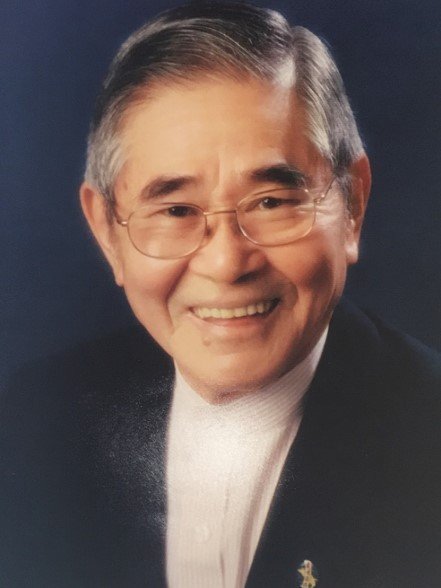
📷 照片取自公開檔案(來源:taiwanjustice.net,Wayback 存檔 20191214133303)。圖說為原始來源所提供,Echo 未經人工逐張查證——若您認得圖中人,歡迎回報修正。